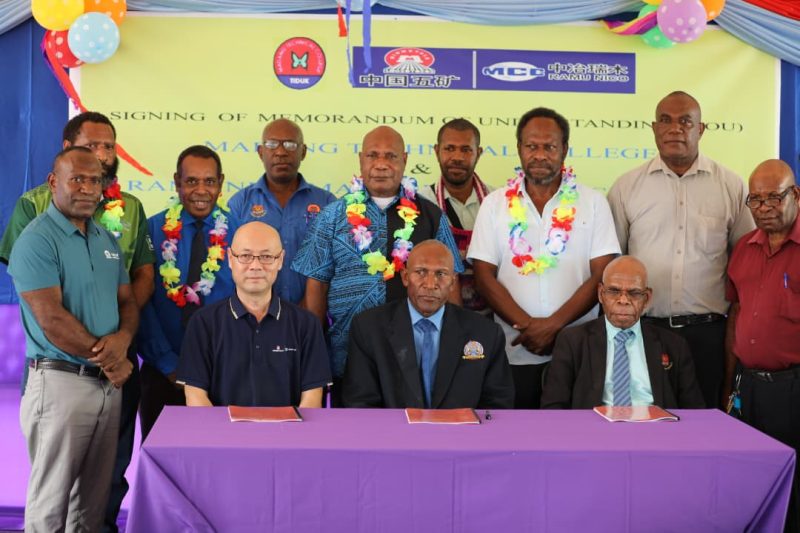
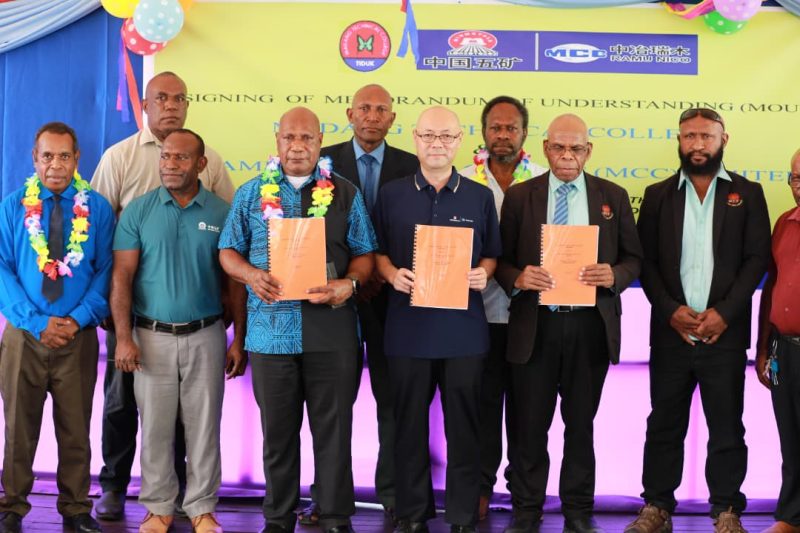
Ramu NiCo on the 07th of October 2026 signed a Memorandum of Understanding ( MoU ) with Madang Technical College that will enrich the Nickel and Cobalt Mine to participate with the Institution for learning . The Program was witnessed by the Department of Higher Education, Research Science and Technology in Madang.
This was the first MoU signing between Ramu NiCo and a Papua New Guineans Education Institution, especially a Technical College in Madang Province. In 2025, Ramu NiCo signed a similar MoU with the University of Papua New Guinea and the PNG University of Technology in Lae to help promote education, training, employment and teacher learning in the Mineral and Resource Industry.
This year the Madang Technical College signed a similar MoU, which is inline to the type of training they deliver in their campus, with the Mine Preparing to help the college to introduce more programs with international instructors that will be attached at the college to deliver the new learning programs for the college.
Ramu NiCo Human Resource Manager Mr Jeffers Heptol Teargun said under the new MoU, the mine will also give opportunity for the students to be involved in the Ramu NiCo’s Graduate Development Scheme (GDS) and Industrial Training for the students with the mine.
“The other objective through this MoU is to establish a program for students and teachers from Madang Technical College to be involved in an exchange program between the two countries. We will establish a partnership program to sponsor students and teachers to do short courses and industrial training in China. We will also collaborate with a couple of Chinese teachers and national trainers to come and inspect and develop some of the courses that we will introduce in the college,” the HR Manager said.
Mr Heptol added that there are other plans under the new MoU with the college for training and development for young unemployed villagers along the companies impacted communities to be also trained into NC certificates level one, level two and after that they will be also introduced into the system that will be implemented at the college in the future.
Deputy Secretary for the Department of Higher Education Research Science and Technology Mr Charles Mabia said the department is pleased to witness such MoU that combines industries with institutions in development, training and workforce.
“This is the set funding model we want to encourage other provinces that have industries like Enga, Southern Highlands, Morobe, Western Province and other provinces to also implement, the deputy secretary said.
Mabai added that the department will facilitate the programs and trainings that will be introduced into the college through quality assurance and are compliant accredited that meet the requirements and maintain the standards meeting to the Papua New Guinea’s extractive industry needs.
“For years, our higher education institutions system has faced one challenge, colleges train without industry, industry operates without colleges, that result is skills mismatch and unemployment. The national government through national higher education plan 2021 to 2030 gave a clear direction, no more isolation, harmonize partnerships to align and fund and deliver, the Deputy Secretary for DHERST,” Mr Charles Mabia said.
Meanwhile Madang Technical College Chairman of the Governing Council Mr Norman Gulo said the MoU is a partnership built on shared vision, mutual respect and a commitment to the future of Madang Province and PNG.
“The MOU represents an opportunity to bridge education and industry. It also allows our students to gain practical skills, exposure to modern technology and pathways to employment,” Mr Gulo said.
He said for Ramu NiCo, it is a chance to invest in local talents, strengthen community ties and contribute to the sustainable development of the province and country as a whole.
The Chairman of the Governing Council for Madang Tech was also proud to witness this collaboration that reflects a collective determination to ensure that Madang Technical College continues to produce graduates who are not only technically competent but also socially responsible and ready to contribute meaningfully to the society and Papua New Guinea.