When the Numuru Bridge collapsed near Malala Catholic Secondary School in the Bogia district of Madang Province, a week of Deep Sea Tailing Placement Awareness work in Bogia faced an unexpected obstacle.
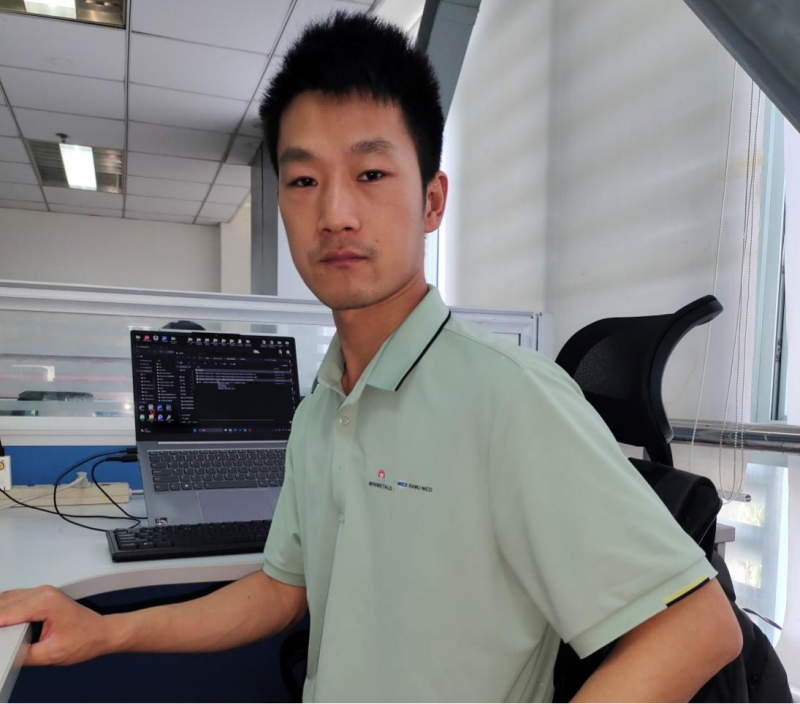
For Gao Dongdong, a Supervisor in Ramu NiCo’s Health Safety and Environment Department, the challenge was not only how to get the team where it needed to go. He has prepared his team to conduct the awareness that week when he received news that the Numuru Bridge near Malala secondary school collapsed.
Calling off the awareness was not a call to make; Mr Gao would still get the last option to take his team across the collapsed bridge to conduct the awareness.
When the team finally arrived at the collapsed bridge site on 27 September 2026, Mr Gao was clearly advised by HSE coordinator Ben Anis that the alternative route ran along a seafront Marine Conservation area, where local people asked Mr Gao’s team to pay more to pass through.
Mr Gao had to consider the team’s safety, company guidelines and the community’s concerns. One thing on his mind was that his team needs to pass through to deliver the scheduled DSTP awareness programme.
Mr Gao is 30 years old from He Nan Province in China, tall and slim, and his quiet and shy manner can make him seem reserved. But behind that appearance, colleagues say, is the energy required to manage demanding work at the Ramu NiCo mine’s HSE department.
From 27 September to 02 October 2026, he successfully administered and delivered the week-long Deep Sea Tailings Placement (DSTP) Awareness programme in Madang Province’s Bogia District.
The work involved careful planning and strict management of the logistics needed for the awareness programme. The bridge collapse added a more personal test on how to respond to local requests while keeping the team moving and treating people with respect.
Mr Gao’s superior, HSE Manager Mr Steve Opur, supported him through the situation. Mr Opur is known for combining the discipline of Chinese management practices with an understanding of how work gets done in Papua New Guinea. That ability helped the two colleagues bring their different perspectives to the challenge.
Together, Mr Gao and Mr Opur worked to find a way forward that respected local customs and helped the team continue its work. The 2026 awareness programme was completed successfully.
For Mr Gao, the experience showed that delivering a programme is about more than meeting schedules and requirements. It also means listening, making fair decisions and building cooperation with the people whose communities the awareness reaches.
Through Mr Gao and Mr Opur’s supervisions, Ramu NiCo made friends and delivered stationaries, computers and printers to remote schools their team visited.